

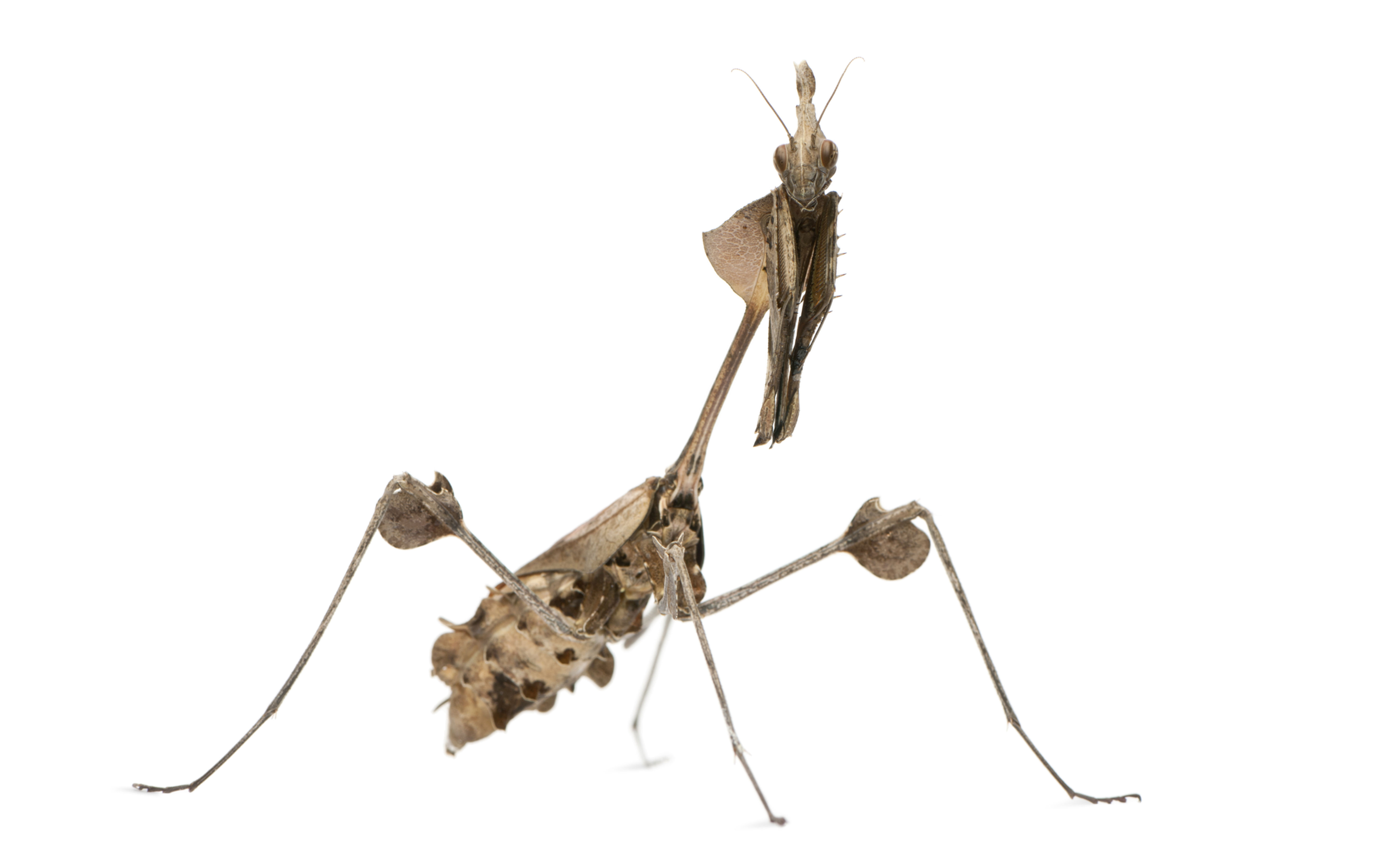

Gongylus gongylodes, commonly known as the Wandering Violin Mantis, is one of the most striking members of the family Empusidae. Its elongated limbs, ornate appendages, and violin‑shaped thorax give it a delicate, almost sculptural appearance. This extreme morphology is not just for show—it provides exceptional camouflage among dry twigs and foliage, allowing the mantis to remain motionless and undetected as it waits for passing prey.
Native to southern India, Sri Lanka, and parts of Southeast Asia, this species thrives in warm, dry environments and is highly specialised in hunting flying insects. Their behaviour is calm and deliberate, often accompanied by a rhythmic swaying motion that mimics vegetation moving in the breeze. When threatened, they can perform a dramatic deimatic display, revealing flashes of colour to startle potential predators.
In captivity, Gongylus gongylodes is known for being one of the few mantis species that can be kept communally, provided food is abundant and space is sufficient. They require high temperatures, low humidity, and a steady supply of flying prey such as fruit flies, greenbottles, or moths. Males are capable fliers and tend to be more delicate, while females grow larger and heavier, with a slightly longer lifespan.
This species remains a favourite among enthusiasts for its elegance, unusual appearance, and relatively peaceful temperament. Whether kept for display, breeding, or educational purposes, the Wandering Violin Mantis offers a fascinating glimpse into the diversity and adaptability of the mantid world.
Wandering Violin Mantis (Gongylus gongylodes)
Size: L3/4 Nymphs
Status: Captive Bred
Range: India, Stri lanka, South East Asia
Temperature 30-35 C Humidity 20-40 %
Diet Small flying insects preferred Enclosure Three times the length of the mantis in height
Twice the length of the mantis in width
Lots of branched perching
Dry and Hot