
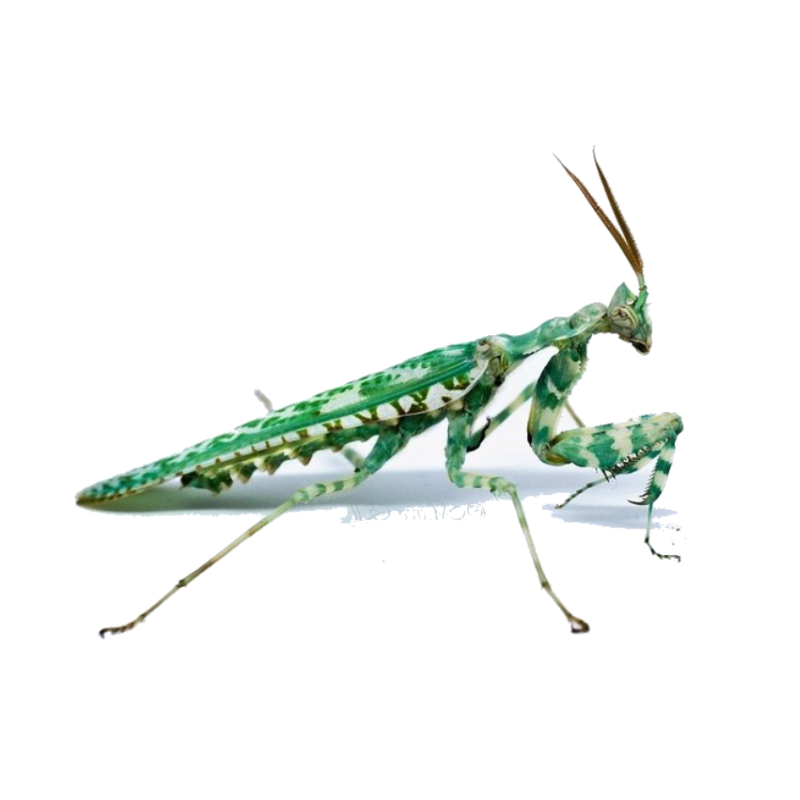

Blepharopsis mendica has a wonderfully understated elegance that sets it apart from the more flamboyant mantis species. Its soft green‑cream marbling and delicate, frilled thorax give it the appearance of a dried flower head swaying in desert wind, making it a natural fit for customers who enjoy subtle beauty over bold colours. Despite this ornate look, it’s a calm, steady species that rarely startles, often choosing to hold its pose rather than dash for cover.
In captivity it thrives in warm, dry setups with good airflow, reflecting its arid origins. Keepers appreciate how little fuss it demands: simple vertical space, modest décor, and a regular supply of small feeder insects are enough to keep it content. Its slow, deliberate movements make it an excellent display animal, and its camouflage means it often blends beautifully into naturalistic enclosures.
For many hobbyists, the Thistle Flower Mantis becomes a favourite not because it is dramatic, but because it is quietly captivating. It’s a species that rewards close observation — the fine textures, the gentle posture, the way it tilts its head with curious precision — all contributing to its reputation as one of the most charming mantids available.
Thistle Mantis (Blepharopsis mendica)
Size: L3/4 Nymph
Status: Captive Bred
Range: North Africa, Canary islands, Middle East and PakistanTemperature 26-32 C Humidity 30-50 % Diet Small Insects Enclosure Three times the length of the mantis in height
Twice the length of the mantis in width