
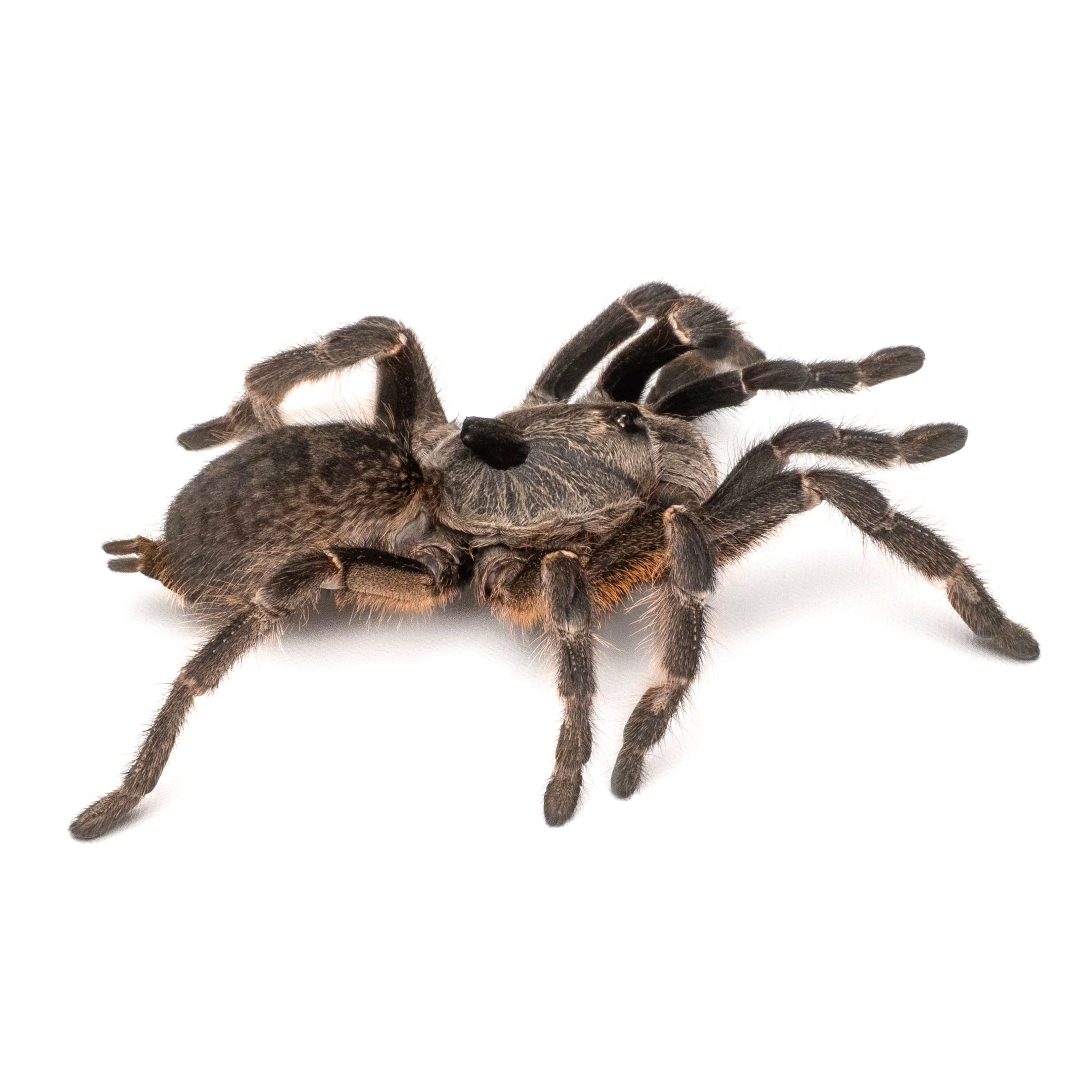

Ceratogyrus darlingi, commonly known as the Rear‑Horned Baboon, is a medium Old World tarantula found across the dry savanna regions of Botswana, Zimbabwe, Mozambique and northeastern South Africa. It’s instantly recognisable by the raised foveal horn on the carapace, a feature most pronounced in adult females. The species shows earthy grey‑brown tones and reaches around 4–5 inches in legspan, giving it a compact but imposing appearance.
In the wild, C. darlingi is a committed burrower, living in firm, dry soils where it constructs deep retreats to regulate temperature and humidity. This behaviour translates directly into captivity: they thrive with deep substrate, strong ventilation and a mostly dry environment with only occasional moisture. They are fast, alert and defensive, typical of Old World baboon species, and should not be considered suitable for handling. Their venom is medically significant, and while bites are rare in responsible setups, they must be respected.
Despite their attitude, Ceratogyrus darlingi is a hardy, reliable species that feeds aggressively and settles quickly once provided with a stable burrow. They are one of the most commonly kept horned baboons, valued for their striking morphology and robust nature, making them a popular choice for experienced keepers who appreciate Old World behaviour and distinctive appearance.
Rear Horned Baboon (Ceratogyrus darlingi)
Specifications
Size: 1-2 cm unsexed
Status: Captive Bred
Range: MozambiqueCare information
Temperature 20-26 C Humidity 50-60% Diet Small Insects Enclosure Terrestrial