
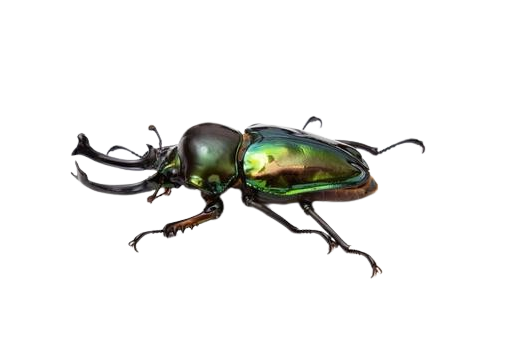

The green form of Phalacrognathus muelleri is one of the most striking and sought‑after colour morphs of the Rainbow Stag Beetle, a species already famous for its metallic iridescence. Native to the rainforests of northern Queensland and parts of New Guinea, this beetle displays a structural colouration that shifts under light, producing deep emerald tones with gold and blue undertones. The green morph is naturally occurring rather than selectively bred, and its intensity varies between individuals, making each specimen visually unique. Males are particularly impressive, with long, curved mandibles and a glossy, armour‑like sheen that can appear almost liquid in strong light.
In the wild, P. muelleri develops within decaying, fungus‑rich hardwoods, where females lay their eggs and larvae spend up to several years feeding and growing. This long larval period is typical of large lucanids and contributes to the species’ rarity and desirability in the hobby. Adults, by contrast, are long‑lived for a stag beetle, often surviving well over a year in captivity when kept warm and well‑fed. Their calm temperament and vivid colours have made them a favourite among breeders and display keepers alike.
The green form behaves identically to the more common red and blue morphs, differing only in the reflective microstructure of the cuticle. Under natural daylight, the colour can appear intensely bright, while indoor lighting brings out deeper emerald and bronze tones. Because the iridescence is structural rather than pigment‑based, the colour fades after death as the cuticle dries, a well‑known trait of the species. This makes live specimens especially prized, and large, vividly coloured males are considered among the most beautiful lucanids in the world.
Rainbow Stag Beetle (Phalacrognathus muelleri) - Green Colour Phase
Size: L2 Grub - Green Colour Line
Status: Captive Bred
Range: Northern Queensland and New Guinea
Temperature 22-26 C Humidity 60-80 % Diet Grubs - Flake Soil, Rotting Wood
Adults - soft fruit, mushrooms, beetle jelly
Enclosure As grubs keep in a smaller container in a depth
of substrate
As adults keeper terrestrial with a deep substrate
layer but also lots of wood and leaf little
for climbing