
Praying Mantis Care
Updated: Aug 13
General care instructions for Praying Mantis.
These are generalist care instructions please refer to species specific instructions for individual species. These can be found alongside each species for sale on the site.
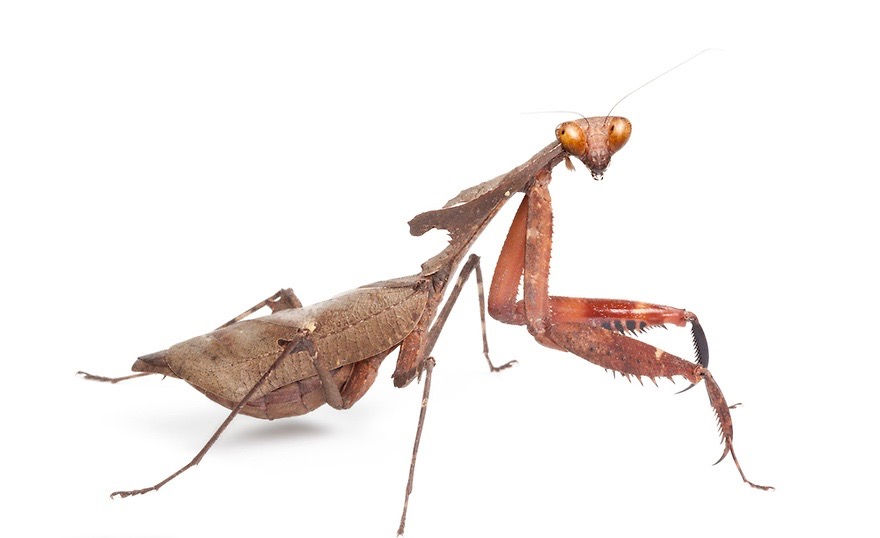
There are close to 1700 species of carnivorous praying mantids out there with around 30 species commonly available. These range from large green standard mantis looking species, to brightly coloured flower mantids and well camouflaged leaf mantids

Temperature
20-25 C, Most species do well at room temperature, however some like a little more humidity.

Lighting
Well lit enclosures.
Avoid direct sunlight

Housing
The general rule is 3 times the length of the mantis. This is very similar in care to the stick insects. Praying mantis metamorphosis is similar to that of the phasmids and is a simple process of 8 sheds.. Glass, plastic and netting are all fine. We would recommend a 30x30x30cm for most species, however you will need larger for the larger species.. Coir fibre, chemical free soil or sand are all good substrates and will help keep humidity in the environment. Humidity is species dependent. Most of the common species do ok in net cage with lower humidity but the more tropical species will need a higher humidity. Mantids do like to drink so spraying every few days will allow them to drink.

Feeding
Praying mantids are insects eaters. As young nymphs they do very well on fruit flies or micro crickets. As they grow they will start taking on larger prey items such as crickets, blue or green bottles, locusts and even butterflies. Some of the larger species are able to catch prey they same size as them. When young offer food all the time. As mantis gets older, offer food every few days.

Sexing
Sexing mantids can be challenging when they are young. Once the mantis is mature it is a lot easier by counting the segments on their abdomen. Males have 7-8 segments, female have 5-6 segments. In some cases such as the orchid mantis, males have a brown band on their neck area, where as females are green. Other species have additional crowns, spikes or differences in colouration.

General
Most mantid species will predate on each other and therefore should be kept separately. Some species such as Ghost Mantids are classed as communal.



Comments