

How to Care for Green Bottle and Blue Bottle Casters
A tub of green bottle or blue bottle casters can turn from “not ready yet” to “far too many flies” quicker than expected. The trick is to control temperature, moisture, and timing so you get usable live flies when your inverts need them, not all at once.
Green bottle and blue bottle casters are the pupal stage of blowflies. They are often used to produce live flies for reptiles, amphibians, mantids, spiders, fish, birds, and other insect-eating animals. They are useful because the adult flies stimulate natural feeding behaviour, especially in animals that prefer moving prey.
Good care starts as soon as the casters arrive. Keep them cool to slow development, warm them to hatch, then handle the flies calmly and feed them properly so they stay alive and active.

What casters are and why storage matters
Casters are pupae. Inside the hard outer case, the fly is finishing its development. Temperature has the biggest effect on how fast that process happens.
When casters are kept warm, development speeds up. When they are cooled, development slows down. That is why a fridge is useful if you want to delay hatching and keep a steady supply.
The aim is not to stop development completely. It is to slow it safely without drying the casters out, soaking them in condensation, or letting mould take hold.
Green bottle and blue bottle casters are similar to care for, but blue bottles are usually larger. That makes them better for bigger feeders, while green bottles suit smaller animals or animals that prefer more manageable prey. In both cases, the basic care is the same.
For best results, start with clean, commercially produced casters rather than wild-collected pupae. Wild maggots and flies can carry contaminants, parasites, pesticides, or unwanted bacteria. If the flies are going to be fed to animals, cleanliness matters.
How to slow hatching in the fridge
The fridge is your “pause button”, but it needs to be used properly. Too cold, too wet, or too sealed can lead to dead casters. Too warm, and they will hatch before you are ready.
Most household fridges sit around 4°C to 8°C, which is usually suitable for slowing caster development. Do not freeze them. Freezing will kill the developing flies.
Use a container that allows a small amount of airflow. A plastic tub with tiny ventilation holes works well. If the casters arrive in a bag, move them into a tub if they will be stored for more than a short period.
Line the tub with dry kitchen roll or plain paper towel. This helps absorb moisture and gives the casters a clean surface. Avoid damp substrate, soil, sawdust, or anything that can hold excess moisture.
A simple fridge setup looks like this:
Storage point | Best practice |
Temperature | Keep cool, not frozen |
Container | Use a ventilated tub |
Lining | Use dry kitchen roll or paper towel |
Moisture | Avoid condensation and wet patches |
Checks | Inspect every day or two |
Placement | Keep away from strong-smelling food |
Strong smells can be absorbed by insects and their packaging, so keep casters sealed enough to stay clean but not so sealed that air cannot circulate. A small tub inside a larger lidded box can also stop escapes if any hatch unexpectedly.
Check the casters regularly. Remove any that look mouldy, crushed, leaking, or dead. Healthy casters should look firm and dry on the outside. As they get closer to hatching, they may darken.
If condensation appears inside the tub, wipe it away and replace the paper towel. Dampness is one of the quickest ways to spoil a batch.
The fridge slows hatching, but it does not reset the clock. Older casters may still hatch soon after warming, even if they have been chilled.
How to hatch green bottle and blue bottle casters
When you are ready to hatch flies, take out only the amount you need. This gives you better control and stops a whole batch emerging at once.
Place the selected casters into a hatching container. A clear plastic tub, insect pot, or mesh-sided container can work. It must have secure ventilation because newly emerged flies will climb, push into gaps, and escape through poor lids.
Add a piece of dry kitchen roll to the bottom. This gives the flies grip when they emerge and helps keep the container clean. Do not add water directly to the casters.
Move the container to room temperature. A warm room will encourage hatching. Avoid placing the tub on a radiator, in direct sun, or near a heat mat unless you are very sure the temperature will stay safe. Overheating can kill the pupae or cause weak flies to emerge.
In many cases, flies begin to hatch within a few days, depending on how developed the casters already were and how warm the room is. Some may hatch sooner. Some may take longer. This variation is normal.
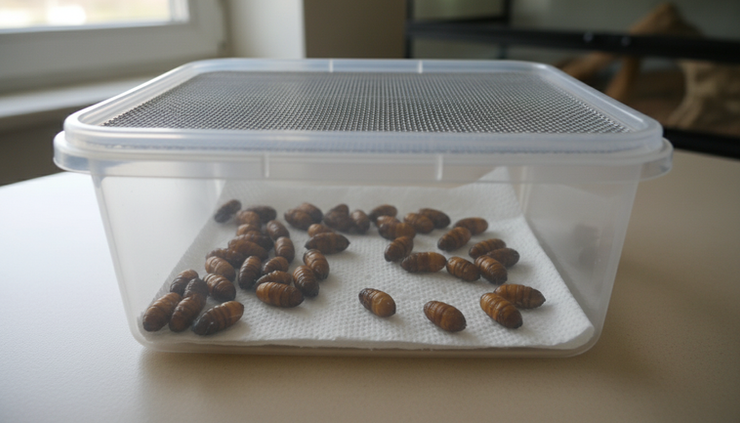
Use a secure hatching container
Flies are excellent at finding gaps. A loose lid or oversized air hole will cause problems.
Good hatching containers have:
A tight-fitting lid
Fine mesh or tiny ventilation holes
A dry base
Enough space for flies to expand their wings
No sticky residues inside
When a fly first emerges, its body is soft and its wings are not fully ready. It needs space and grip while it hardens. If the container is overcrowded, some flies may become damaged or fail to develop properly.
Hatch in small batches
Small batches are easier to manage. They are also better for feeding routines because you can provide fresh, active flies instead of trying to keep a huge number alive.
A practical method is to keep most casters in the fridge and move a small portion to the hatching tub every few days. This creates a rolling supply.
If too many hatch at once, chill the fly container briefly before handling. Cooling does not kill them if done sensibly, but it slows them down so they are easier to transfer.
How to handle live flies without chaos
Live flies are useful feeders, but they can be frustrating if they escape. The easiest way to handle them is to slow them down first.
Place the fly container in the fridge for a short period until the flies become sluggish. This usually makes them much easier to move. Do not leave them chilling for longer than needed, and do not put them in the freezer unless you intend to euthanise them.
Once slowed, tap the container gently so the flies drop to the bottom. Open the lid only as much as needed. Use feeding tongs, a small funnel, a soft brush, or a second tub to move them.
Work in a calm place with doors and windows closed. If possible, handle flies inside a larger storage box or over a bath, sink, or empty feeding bin. That way, if one escapes the small tub, it is still contained.
For animals that feed in enclosures, you can release a small number at a time. This prevents stress, reduces waste, and makes it easier to see how many are eaten.
Avoid dumping a full tub of flies into an enclosure. Uneaten flies can annoy resting animals, contaminate water bowls, or die in hidden corners.
A simple transfer method
Use this method when you want to feed a few flies without filling the room with them:
Chill the flies until they slow down.
Tap them to the bottom of the tub.
Open the lid slightly.
Shake or tip a few into a feeding cup.
Close both containers straight away.
Let the flies warm up before offering them, if the animal prefers active prey.
For very quick feeders, you can offer the flies while they are still slow. For visual hunters, warmer and more active flies often work better.
How to keep hatched flies alive for feeding
Adult flies need three basic things: air, carbohydrate, and moisture. Without these, they weaken quickly.
A fly-keeping tub should be secure, ventilated, and easy to clean. Fine mesh lids are ideal. Smooth plastic sides help with visibility, but flies also need somewhere to rest. A folded piece of paper towel, cardboard egg tray, or clean mesh can provide extra surface area.
For food, offer a simple sugar source. You can use a small smear of honey, sugar water soaked into cotton wool, or a specialist feeder insect food. Keep it contained so the flies do not get stuck.
For moisture, use damp cotton wool, a small piece of water gel, or kitchen roll lightly moistened with water. Do not use an open water dish. Flies can drown easily.
Keep the fly tub at a cool room temperature if you want them active, or chill them briefly when you need to slow them for feeding. Very warm conditions shorten their useful life. Dirty, wet conditions also cause rapid losses.

Feeding the flies before feeding them to animals
If flies are being used as feeders, keeping them alive is only part of the job. You also want them in good condition.
Many keepers give flies access to sugar and moisture for at least several hours before feeding. This helps them become active and responsive. Some also use bee pollen, powdered insect food, or a suitable gut-loading mix in small amounts.
Do not overdo wet foods. Fruit and soft foods can spoil quickly, especially in warm rooms. If you use a tiny piece of fruit, remove it before it turns mushy or mouldy.
Keep the setup clean. Replace dirty paper towel often. Remove dead flies promptly. Rinse and dry tubs between batches.
How long can live flies be kept?
Adult bottle flies are best used fresh. They can often be kept for several days if they have air, food, and moisture, but their condition will decline over time.
The best feeding flies are:
Fully emerged
Active once warm
Able to fly or climb normally
Clean and dry
Not covered in old food or condensation
If flies become weak, sticky, smelly, or mould appears in the tub, do not use that batch. Start fresh.
Common problems and how to fix them
Even with good care, casters and flies can be unpredictable. Most problems come from temperature, moisture, or overcrowding.
The casters hatched too soon
They were probably too warm or already close to emergence. Move future batches into the fridge as soon as they arrive. Hatch smaller amounts at a time.
If flies have already emerged, feed them with sugar and moisture, then use them as soon as possible.
The casters are not hatching
They may be too cold, too dry, too old, or not viable. Move a small test batch to a warmer room and give it time. Do not overheat them to force hatching.
If nothing emerges after a reasonable period at room temperature, the batch may have failed.
The tub is wet inside
Condensation is a warning sign. Replace the paper towel, wipe the tub, and improve airflow. Keep the container away from sudden temperature changes, which can cause moisture to collect inside.
Flies are dying soon after hatching
They may have no moisture, no sugar, poor ventilation, or too little space. Check that they are not getting stuck in honey or drowning in water. Use damp cotton wool or water gel instead of open liquid.
Flies keep escaping
Check the lid, air holes, and feeding routine. Use finer mesh and chill flies before opening the tub. Handle them inside a larger container until you get used to the process.
Hygiene and safety when using bottle flies
Bottle flies are feeder insects, but they still need sensible hygiene. Wash your hands after handling tubs, casters, flies, or enclosure items. Keep feeder insect equipment separate from kitchen equipment.
Do not store casters uncovered in a fridge with open food. Use sealed outer boxes where needed, while still allowing some airflow for the caster container.
Do not release surplus flies outdoors. Even common species should be managed responsibly, and captive feeder insects may not belong in the local environment. If you need to dispose of unwanted flies, chill them first and follow a humane, sensible disposal method.
Only feed flies to animals that can safely eat them. Match the fly size to the animal. A blue bottle may be too large for a small mantis or jumping spider, while a green bottle may be more suitable.

A simple weekly routine for steady feeding
The easiest way to manage casters is to run them in stages. Keep the main supply cool, hatch a small amount, then maintain the adult flies for feeding.
Here is a simple routine:
Store most casters in the fridge
Keep them dry, ventilated, and checked.
Move a small portion to a hatching tub
Warm only what you expect to use soon.
Wait for emergence
Keep the tub at room temperature and away from direct heat.
Feed and water the adult flies
Use sugar and safe moisture once they hatch.
Chill before handling
Slow the flies briefly so feeding is controlled.
Clean between batches
Remove dead flies, old food, and dirty paper.
This rolling method gives you better timing and less waste. It also means you can adjust depending on how many flies your animals eat.
Final tips for better results
Green bottle and blue bottle casters are simple to use once you understand the timing. Cool temperatures slow them down. Warmth brings them on. Clean, dry storage prevents losses. Adult flies last longer when they have air, sugar, and safe moisture.
For the best results, remember these key points:
Keep casters in the fridge to slow hatching.
Never freeze casters you want to hatch.
Hatch small batches at room temperature.
Use secure, ventilated containers.
Chill live flies briefly before handling.
Feed adult flies with sugar and safe moisture.
Keep everything clean and dry.
Use fresh, active flies whenever possible.
A little routine makes a big difference. Once you have a fridge tub, a hatching tub, and a fly-feeding tub set up, caring for green bottle and blue bottle casters becomes much easier. You will get better hatch rates, fewer escapes, and healthier live flies ready when feeding time comes.


Comments